

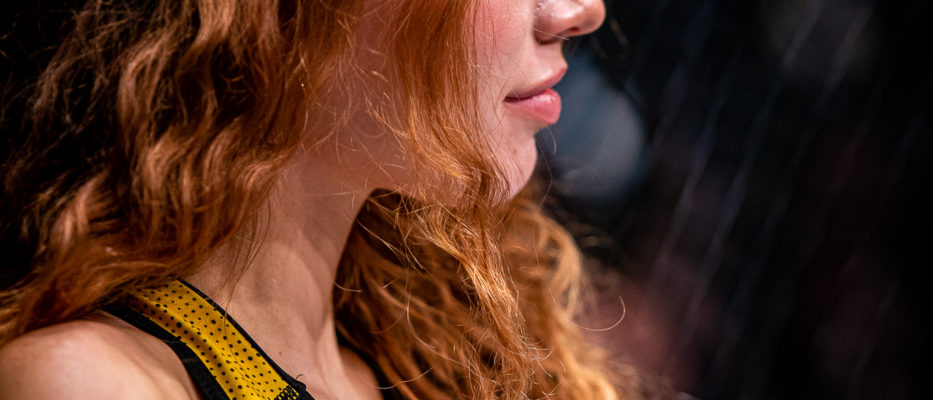
History and Evolution of Women’s MMA: From Fighting for a Place in the Cage to Global Popularity | HISTORY 2025
MMA (Mixed Martial Arts) is no longer a men-only domain. Women’s MMA has grown into one of the fastest-rising divisions in combat sports, despite the many obstacles female fighters have had to overcome. From the pioneers of women’s fighting to today’s superstars such as Amanda Nunes, Ronda Rousey and Valentina Shevchenko, women’s MMA has undergone a remarkable transformation.
The beginnings: fighting for recognition
Although women have practised martial arts for centuries, women’s MMA was long considered a niche sport. In the 1990s the first professional women’s bouts appeared in Japan, where organisations such as Smackgirl and Shooto gave female fighters a platform.
In the United States women’s MMA started to take shape in King of the Cage and Hook n’ Shoot, but those fights received little media attention. Most major promotions refused to include women, and the UFC long insisted that “nobody would watch” women’s MMA.
Ronda Rousey and the UFC revolution
The turning point came with Ronda Rousey, an Olympic judo medallist who moved to MMA and dominated Strikeforce. Her aggressive style, signature armbar and charisma convinced UFC president Dana White that women’s MMA deserved a place in the sport’s most prestigious organisation.
In 2013 the first women’s fight in UFC history took place: Rousey defeated Liz Carmouche and became the first UFC women’s champion. That moment opened the door for female fighters for good.
The rise of women’s MMA: a new generation
After Rousey, new stars took women’s MMA to the next level:
- Amanda Nunes – the first woman to hold two UFC titles at the same time (bantamweight and featherweight), widely regarded as one of the greatest of all time.
- Valentina Shevchenko – a technical master who dominated the flyweight division.
- Cris Cyborg – a legendary power fighter who won titles in the UFC, Strikeforce and Bellator.
- Rose Namajunas – a two-time strawweight champion known for her elite technique and mental toughness.
New weight classes gave more women the chance to compete at the top level. Over the years the UFC introduced four women’s divisions: strawweight (115 lb), flyweight (125 lb), bantamweight (135 lb) and featherweight (145 lb).
Obstacles and challenges
Despite their success, female fighters still face challenges:
- Pay disparity – women in MMA often earn less than men, even at the highest level.
- Less media coverage – while some female fighters are global stars, women’s fights still receive less promotion.
- Stereotypes and bias – despite growing popularity, some still see combat sports as a male discipline.
Women’s MMA today: part of the mainstream
Today MMA without women’s fights is unthinkable. The UFC, PFL and other organisations regularly stage high-profile women’s bouts, and talents such as Weili Zhang, Julianna Peña and Manon Fiorot prove that women’s MMA keeps evolving.
What was once a rarity is now a regular part of the sport: female fighters have fans all over the world and are respected just as much as their male colleagues.
Read also
- História a vývoj ženského MMA (SK)
- History of MMA – how modern cage fighting was born (SK)
- Balázs Őze (CombatX): “Hungarian combat sports are in their golden era” (EN)
Follow FIGHTPORTAL: Instagram @fightportal.sk · Facebook FIGHT Portal · fightportal.sk
Author: Mgr. Ing. Marek Herda · © Fightportal, all rights reserved.